

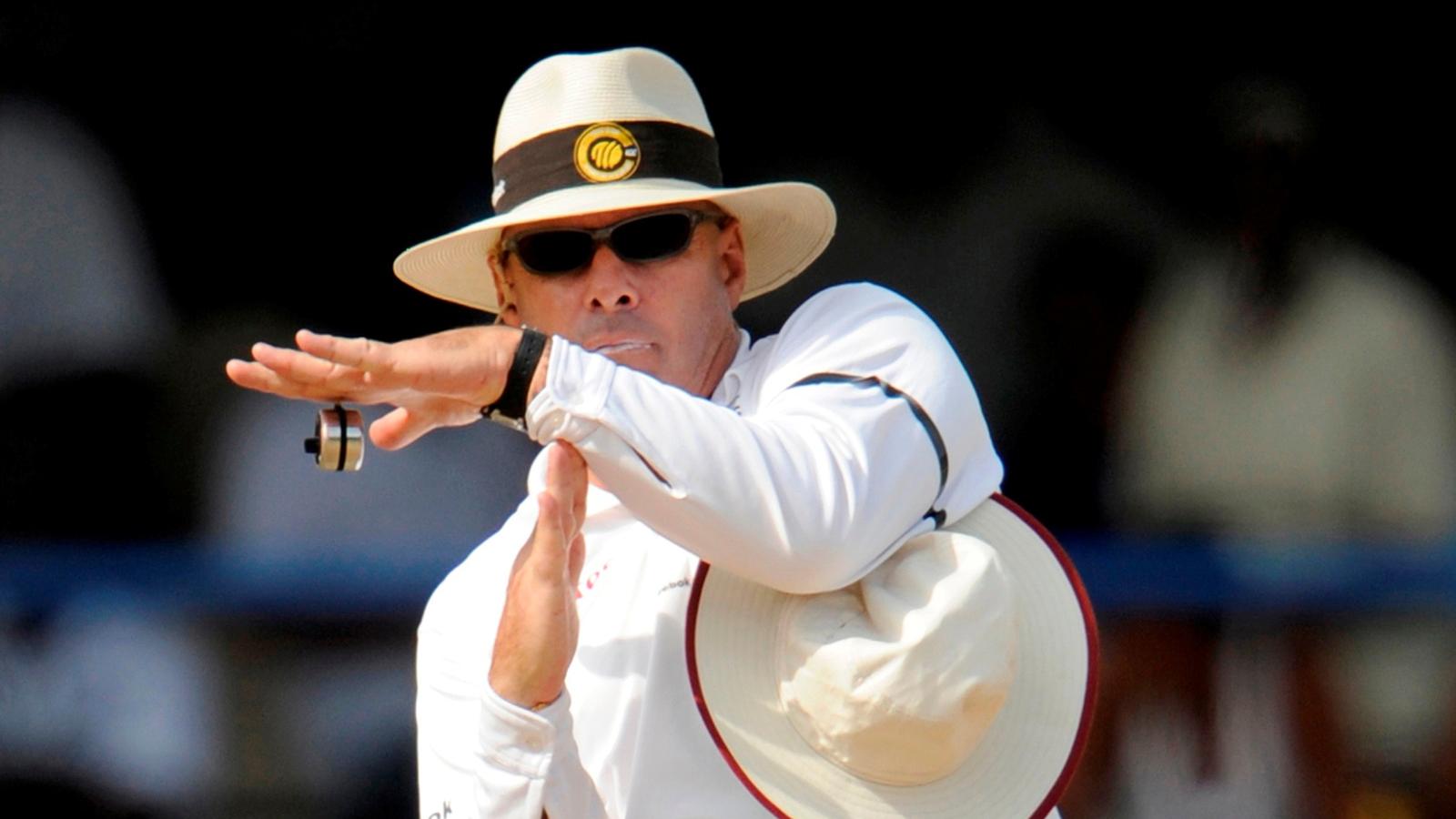
Cricket umpires make decisions in a fraction of a second. They must judge edges, leg before wicket appeals, run outs and catches while following the action closely. However, even experienced officials can make mistakes.
The Decision Review System helps reduce those errors. It allows players to challenge certain decisions and gives the third umpire access to video replays and approved technology. DRS has become an important part of international cricket, particularly when a close decision can change the result of a match.
Understanding the DRS full form, review rules and technology makes it easier to follow these moments during a game.
What is the full form of DRS in cricket?
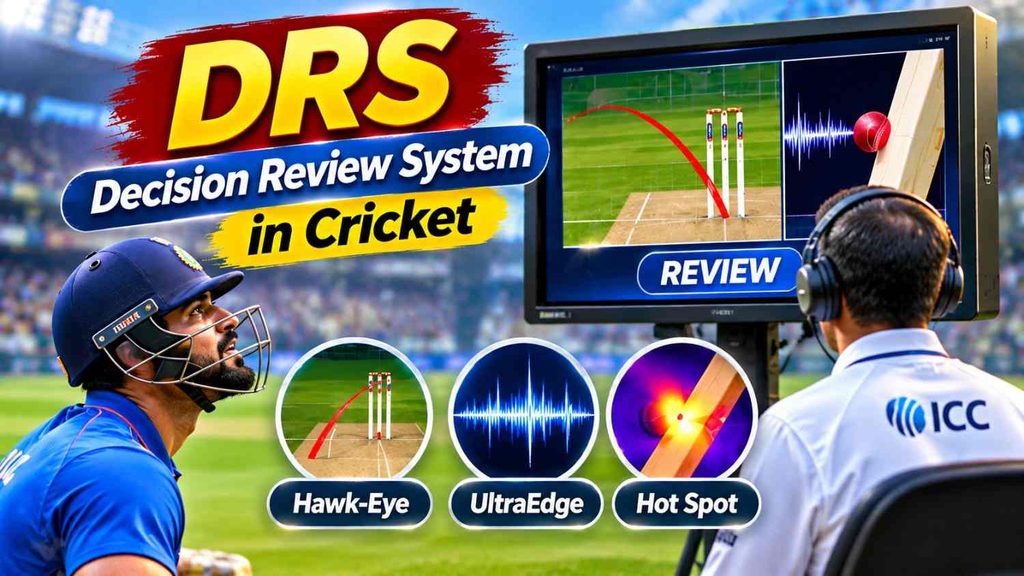
DRS stands for Decision Review System. It is a technology-based process used to help match officials make more accurate decisions.
Under the system, an on-field umpire can refer a decision to the third umpire. A player can also request a review if their team disagrees with an eligible decision.
The International Cricket Council (ICC) describes DRS as a process that assists match officials. It recognises two types of reviews: Player Reviews and Umpire Reviews.
The system does not replace the on-field umpires. Instead, it gives them additional evidence to make a decision.
How does the Decision Review System work?
DRS follows a set process. The third umpire checks the available evidence and communicates the result to the on-field officials.
Here is how a typical Player Review works:
- The on-field umpire gives an out or not out decision.
- The eligible player or captain decides whether to challenge it.
- The player or captain makes the T sign using both forearms at head height.
- The third umpire checks the available replays and approved technology.
- The third umpire communicates the findings to the on-field umpire.
- The on-field umpire announces the final decision.
A team must request a review within 15 seconds after the ball becomes dead under the relevant ICC men’s playing conditions. The bowler’s-end umpire gives a reminder after 10 seconds if no request has been made.
Who can request a review depends on the original decision:
- If the batter is given out: Only the batter involved in the dismissal can request a Player Review.
- If the batter is given not out: Only the fielding captain or acting captain can request a Player Review.
The third umpire checks the evidence according to the relevant dismissal and the available technology. The original decision can be overturned if the evidence meets the required conditions.
Types of DRS reviews in cricket
There are two main types of reviews in the Decision Review System.
1. Player Review
A Player Review allows a team to challenge an eligible decision made by an on-field umpire.
When the umpire gives a batter out, only the batter involved can request a review. When the umpire gives a batter not out, the fielding captain or acting captain can request one.
Player Reviews are limited to decisions about whether a batter has been dismissed. A review cannot be requested for a standalone wide-ball or no-ball decision. The exception is a decision involving a batter’s dismissal where the relevant playing conditions allow the review. Timed Out is excluded from Player Review eligibility.
The request must follow the time limit and other conditions in the competition’s playing rules.
2. Umpire Review
An Umpire Review happens when an on-field umpire refers a decision to the third umpire.
This can happen when officials need additional evidence to judge a run out, stumping, catch or boundary decision. The third umpire checks the available camera angles and other relevant evidence.
For example, an umpire may refer a close run-out decision to check whether the batter reached the crease before the bails were removed. An umpire may also seek assistance when unsure whether a catch was taken cleanly or whether the ball crossed the boundary.
Unlike Player Reviews, Umpire Reviews are not charged against a team’s review allowance.
Technology used in DRS
The Decision Review System uses different technologies to examine specific incidents. The tools available depend on the competition’s playing conditions and the facilities at the venue. Not every technology is used in every match.
| Technology | Purpose |
| Hawk-Eye | Tracks the ball’s path for LBW decisions |
| Virtual Eye | Provides ball-tracking technology for LBW decisions |
| UltraEdge | Uses audio analysis to help detect possible bat-ball contact |
| Real-Time Snickometer | Uses sound to help identify a possible edge |
| Hot Spot | Uses thermal images to identify possible contact |
| Virtual Eye Sonic | Uses advanced audio analysis to help identify possible bat-ball contact |
| Slow-motion replays | Help examine catches, run outs and other incidents |
| Stump microphones | Provide audio evidence during reviews |
Hawk-Eye and Virtual Eye are approved ball-tracking options. UltraEdge and Real-Time Snickometer are sound-based edge-detection options. Hot Spot is another approved technology option. The exact combination depends on the match arrangements.
Virtual Eye Sonic: A new DRS development
Virtual Eye Sonic is a newer technology development for DRS. On 21 October 2026, New Zealand Cricket announced that Sonic would be used for the first time as part of DRS during the India tour of New Zealand, which began on 22 October 2026.
The technology uses advanced audio analysis to help third umpires identify possible contact between the bat and ball. It adds another method of examining close decisions involving possible edges.
Its use depends on the approved technology arrangements for the relevant match.
Hawk-Eye and ball tracking
Ball tracking is mainly used for leg before wicket (LBW) decisions. It helps the third umpire assess three important details:
- Pitching: Where the ball landed.
- Impact: Where the ball first hit the batter.
- Wicket: Whether the ball would have hit the stumps.
The technology predicts the ball’s path after it hits the batter. The third umpire uses this information alongside the relevant LBW rules, including the batter’s attempt to play the ball, to reach a decision.
Ball tracking provides evidence, but it does not make the final decision independently. The third umpire must consider the applicable Laws of Cricket and playing conditions.
UltraEdge and Snickometer
UltraEdge and Real-Time Snickometer help determine whether the ball touched the bat.
These systems use audio evidence to identify a possible edge. The third umpire examines the sound alongside the video replay to check whether contact occurred.
This is particularly useful when the on-field umpire cannot clearly see whether the ball touched the bat before reaching the wicketkeeper or a fielder.
Hot Spot
Hot Spot uses thermal imaging cameras to identify possible contact between the ball and the bat or pad.
When the ball makes contact, it can leave a heat mark on the surface. The third umpire can examine this image along with other evidence.
The availability of Hot Spot depends on the technology provided for a particular match.
What is Umpire’s Call in DRS?
Source Image: Itsonlycricket
Umpire’s Call is an important part of the Decision Review System. It applies to marginal LBW decisions when ball tracking shows that the evidence is close to the relevant limits.
Under the ICC playing conditions, Umpire’s Call can apply in two areas:
- Impact Zone: When the ball first hits the batter and the result is marginal.
- Wicket Zone: When ball tracking predicts that the ball would only marginally hit the stumps.
For example, the ball may be clipping the stumps rather than clearly hitting them. A marginal result can also occur when the point of impact falls close to the applicable boundary.
In such situations, the original on-field decision stands.
This means:
- If the original decision was out, the batter remains out.
- If the original decision was not out, the batter remains not out.
The team keeps its review if the decision remains unchanged solely because of Umpire’s Call.
Umpire’s Call recognises that ball tracking has a margin of uncertainty in marginal decisions. It also protects the original judgement of the on-field umpire in those situations.
How many DRS reviews does each team get?
The number of Player Reviews available depends on the match format. Under the standard ICC men’s international playing conditions introduced for series starting on or after 1 October 2026, the allowances are:
| Cricket format | Unsuccessful reviews allowed per team per innings |
| Test cricket | 3 |
| One Day International | 2 |
| T20 International | 2 |
A successful review does not count towards the team’s unsuccessful review limit. A review that remains unchanged solely because of Umpire’s Call also does not count.
There are additional exceptions under the playing conditions:
- A review may be retained when a not-out decision stands because the delivery was a no-ball and no further evaluation is required.
- If a review cannot be properly completed because of a technology failure, the match referee may reinstate an unsuccessful review at their discretion.
For example, if a team uses a review and the third umpire overturns the decision, the team keeps its review allowance. If the review fails without qualifying for an exception, the team loses one review.
Important date clarification: The October 2026 ICC playing conditions apply to international series that start on or after 1 October 2026. A series that was already in progress on that date continues under its previous playing conditions.
These figures refer to the standard ICC men’s international playing conditions. Domestic leagues and individual competitions may have their own rules.
History of DRS in cricket
The Decision Review System was first tested in international cricket during the India tour of Sri Lanka in July 2008. It was introduced to help officials correct clear mistakes through television evidence and technology.
One of the best-known early incidents involved India’s Virender Sehwag during the first Test against Sri Lanka at Colombo in July 2008. In India’s second innings, Muttiah Muralitharan requested an LBW review after the on-field umpire initially ruled Sehwag not out. The third umpire reviewed the delivery and gave Sehwag out.
The ICC officially introduced DRS in Test cricket in November 2009, beginning with the New Zealand versus Pakistan Test in Dunedin.
It later expanded its use across One Day Internationals and T20 Internationals.
The system has continued to develop as camera coverage and ball-tracking technology have improved. Today, it is used in many international matches and major domestic competitions.
Why is DRS important in cricket?
DRS helps make cricket decisions more accurate and gives teams a way to challenge possible mistakes. Its main benefits include:
- Better decision-making: Video evidence and technology help officials review difficult incidents.
- Fairer results: A clear umpiring error can be corrected before it affects the match.
- More confidence: Players and spectators can see how important decisions are examined.
- Support for umpires: The system provides additional evidence without removing the authority of the on-field officials.
- Greater clarity: Replays help explain close decisions involving edges, LBW appeals, catches and run outs.
DRS cannot remove every disagreement. Some decisions remain marginal, especially when ball tracking produces an Umpire’s Call result. However, it gives match officials more information than they would have without the system.
Conclusion
The Decision Review System has changed how cricket officials handle close decisions. Its full form is Decision Review System, and it combines video replays with approved technologies such as Hawk-Eye, Virtual Eye, UltraEdge and Hot Spot.
New developments such as Virtual Eye Sonic are adding further ways to examine possible bat-ball contact.
Players can challenge eligible decisions through Player Reviews, while on-field umpires can refer incidents through Umpire Reviews. Review limits and the Umpire’s Call rule help keep the process controlled.
DRS does not make every decision straightforward, but it gives officials better evidence and helps improve fairness in modern cricket.
FAQs about DRS in cricket
DRS stands for Decision Review System. It is a technology-based process that allows players to challenge eligible umpiring decisions and helps officials review close incidents.
Only the batter involved can request a review when given out. If the umpire gives a batter not out, the fielding captain or acting captain can request a review. The request must be made within 15 seconds after the ball becomes dead under the relevant ICC men’s playing conditions.
Under the ICC men’s Test playing conditions introduced for series starting on or after 1 October 2026, each team can have up to three unsuccessful Player Reviews per innings. Successful reviews and reviews retained through Umpire’s Call do not count towards this limit.
An unsuccessful review normally reduces the team’s remaining review allowance by one. However, a review that remains unchanged solely because of Umpire’s Call does not cost the team its review. A no-ball exception and certain technology-failure situations may also allow a review to be retained or reinstated under the playing conditions.
A Player Review is requested by the eligible batter or fielding captain to challenge a decision about whether a batter has been dismissed. An Umpire Review is initiated by an on-field umpire when additional evidence is needed. Umpire Reviews do not use a team’s Player Review allowance.